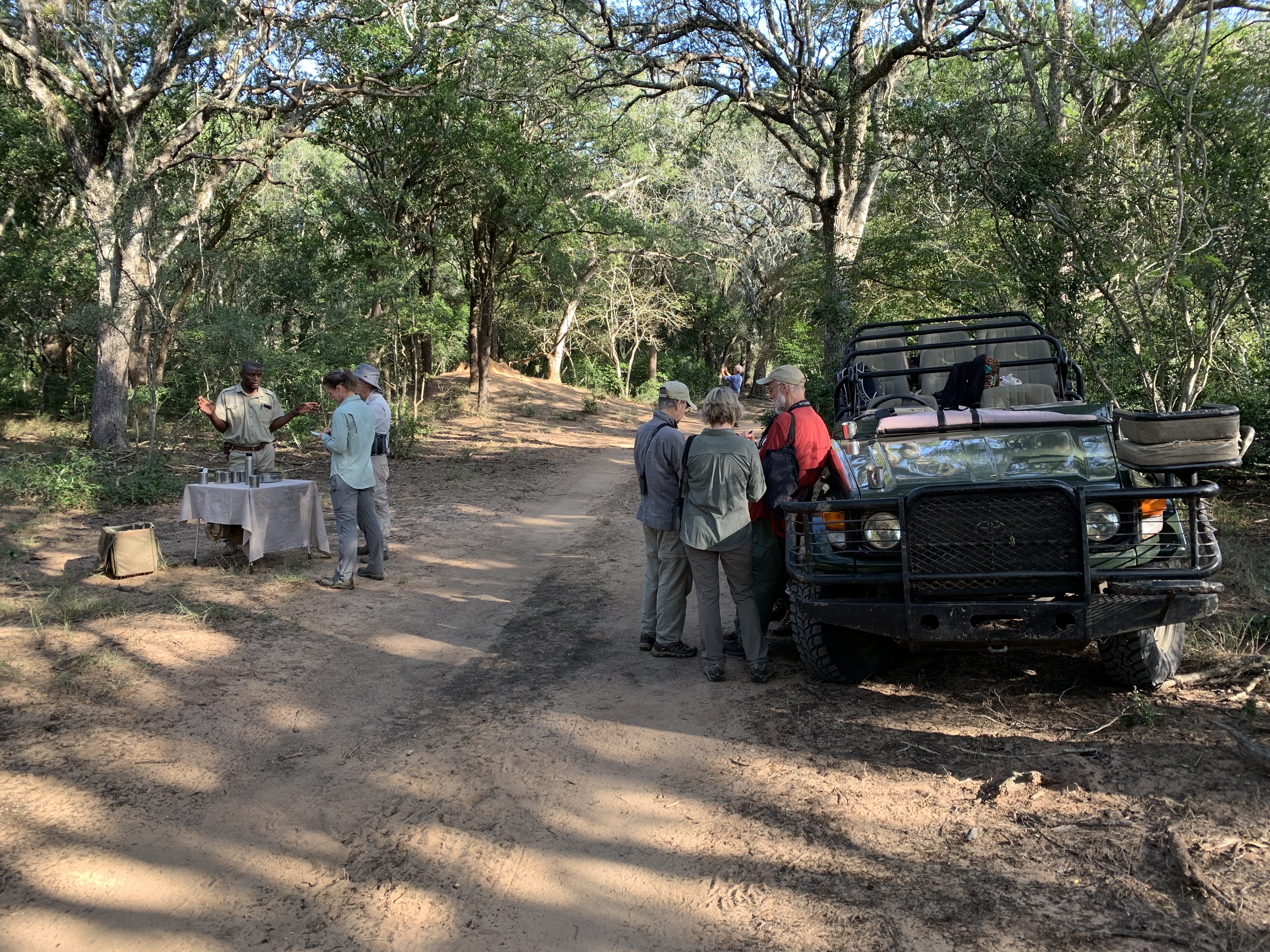
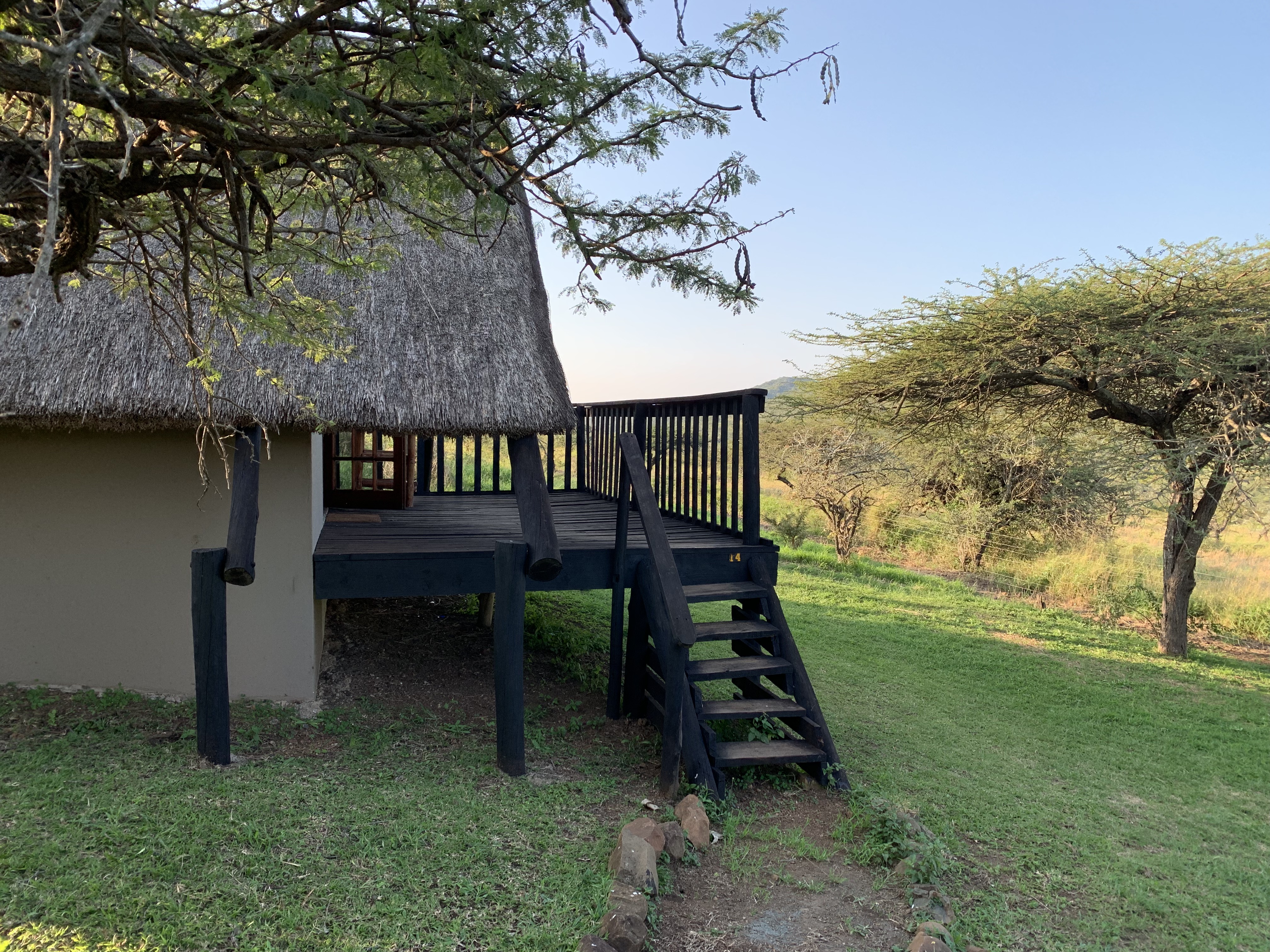
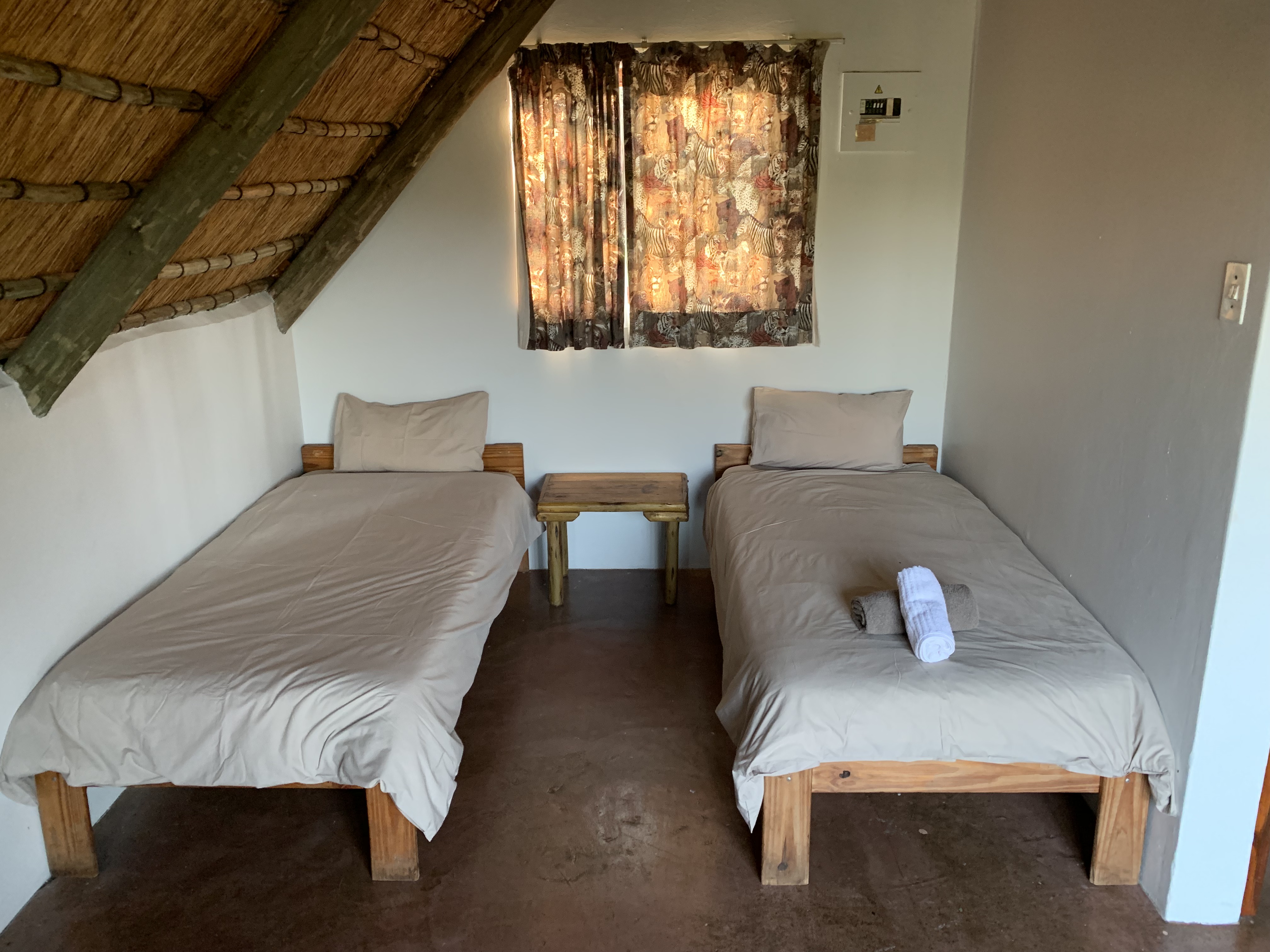
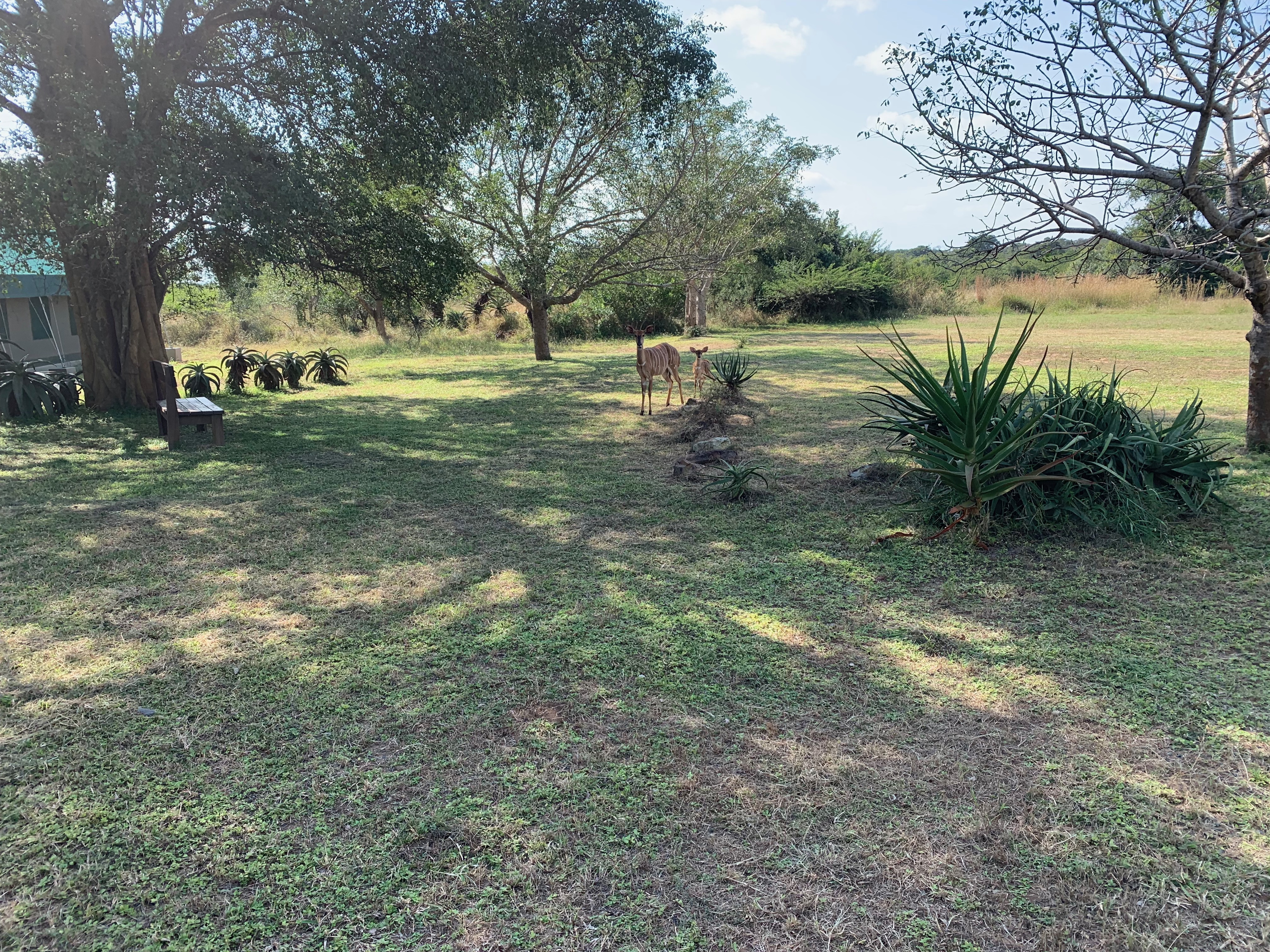
Our days varied a bit, but as a generalization, we did a trek in the morning and a drive in the afternoon. Our accommodations were comfortable with a touch of Africa. A small cabin with a thatched roof at Thanda and a big tent at Phinda. Large wild animals wondering through camp was the norm. Both of these wonderful wildlife reserves are in what could be characterized as the north east of South Africa near the Indian Ocean. There are many types of reserves in South Africa. These that we visited allow no recreational hunting and are mainly research oriented. They are growing as a result of the collaboration between local farmers and Zulu communities thriving on visitor traffic such as our safari organized by Biologist Without Boarders.
For example, a Zulu community might arrange a 100 year lease for their 7,000 acres of tribal land in exchange for the reserve foundation building and supporting a school. Electric fences would be built and maintained using local labor and the community would help prevent poaching since it was the charismatic mega fauna that was attracting visitors. Small donations and million dollar checks are flowing in from Europe and North America to buy out farmers that are giving up on pineapple farming or silva culture. The one school we saw that was largely supported by the reserves was excellent and the young people in their blue uniforms were obviously being prepared for a modern South Africa.
We were very impressed by the quality of people involved in anti poaching operations. They caught a team of poachers while we were there! An ambush of the team of armed poachers at night was described by finger drawings on the sand by a brave man very proud of his work to save the rhino. The new South African Poacher laws can put rhino poachers away for up to 15 years. Ybonga was our camp guard at Phinda. He walked us to our tents at night after dinner. We had heard enough stories about lions trapping people inside their quarters to set aside bravado and be reasonably cautious after dark. A lion sneaking in behind us to drink at a water hole as we watched the sunset was enough to make me the most prudent I have ever been in my whole life about walking in the dark. Ybonga was a proud, gracious, gentile giant and an awesome Zulu warrior against poachers. Donations of boots, night watch gear and uniforms were much appreciated. These brave men put their life on the line every night just so that we could see a living white rhino in open country. Amazing!
A typical day would start with coffee at 6 AM and in the Safari Jeep by 6:30 to drive to the start of our walk. But that meant we were up at 5:30 getting ready; sun screen because we knew we would need it, insect repellent on the cuffs to discourage the ticks, camera batteries charged, clean binoculars, sun hat, layers of clothing, tough shoes because there were spiky things everywhere, and as much water as you thought you would need or carry. Some had more than others. Smart phones with downloaded searchable catalogues of birds, and wildlife were the envy of all. I used my iPhone 10X as a camera a lot of the time. My daughter had loaned me her Nikon D80 with a 70-300 lens. The day packs were heavy.
We might drive for 30 minutes along lumpy roads, bordered with miles of electric fences. The fences had 10,000 volt charges. That is serious voltage at low amps but definitely no human wants that experience. At best, the fences were suggestions to the mega fauna. A determined or panicking elephant could just burst through of course. The cheetahs, leopards and antelope could clear the 10 foot high fences without breaking stride. Wart hogs and other diggers could go underneath but for the most part the fences secured the reserves animals from wondering onto farms where they would be shot for killing live stock or trampling crops. The fences deterred all but the most criminally oriented poachers. The reserves spend enormous funds protecting rhinos from being killed for their horns. A small piece of a rhino horn can be a prized family possession in Southeast Asian countries. A partial horn is worth thousands of dollars to wealthy but ignorant, superstitious people. The horns grow about and inch a year. That means each white or black rhino needs to be tracked down, and anesthetized so the horn can be cut off every two to three years.
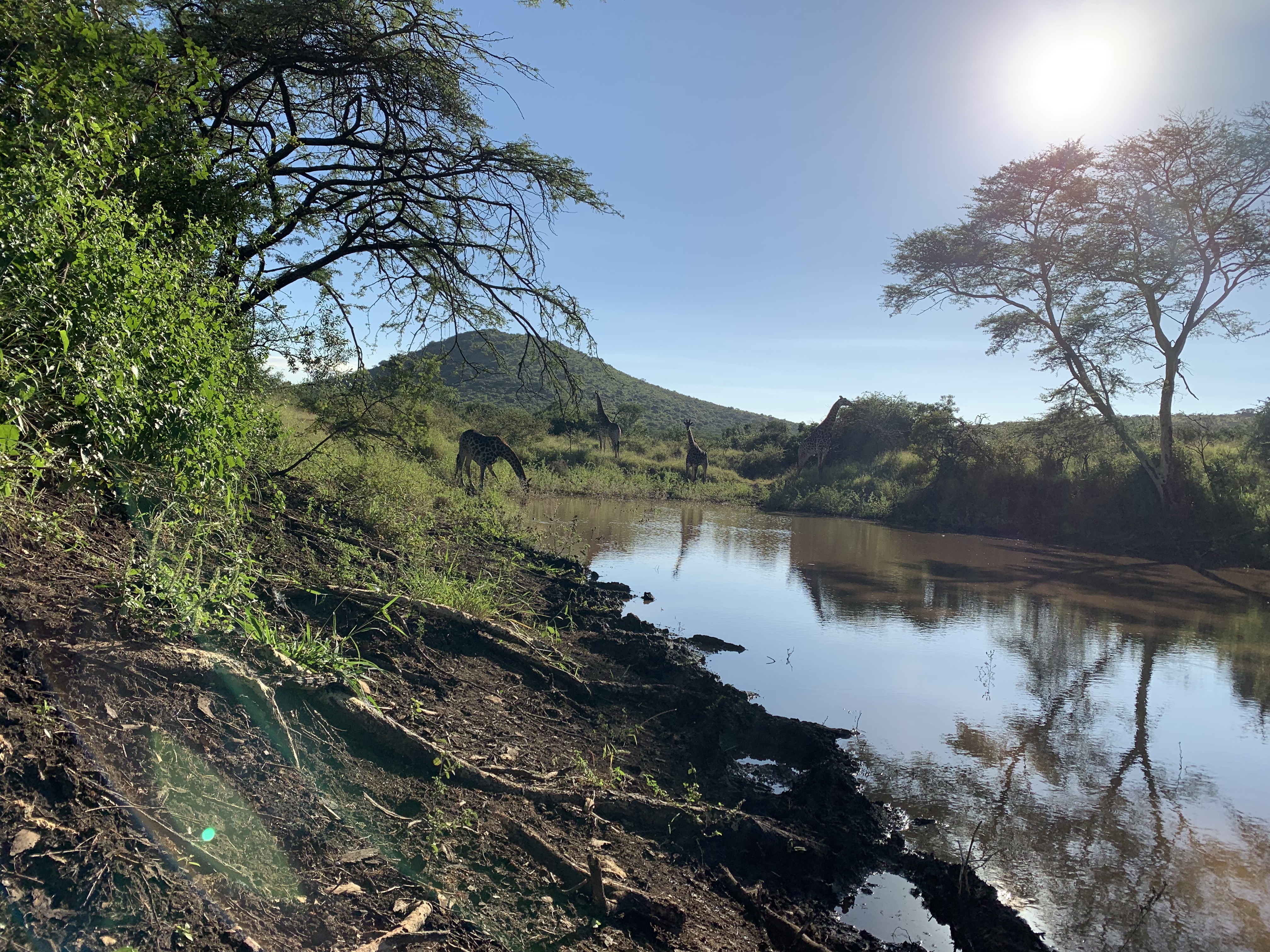
Around 10 A.M. we would return to the camp and have breakfast/brunch. Sometimes indoors but other times, delightfully under a big tree where we could watch antelope or giraffes wonder by. Around 3nP.M. We would be back on the dirt roads in search of big game in the sub-habitats of the savanna.
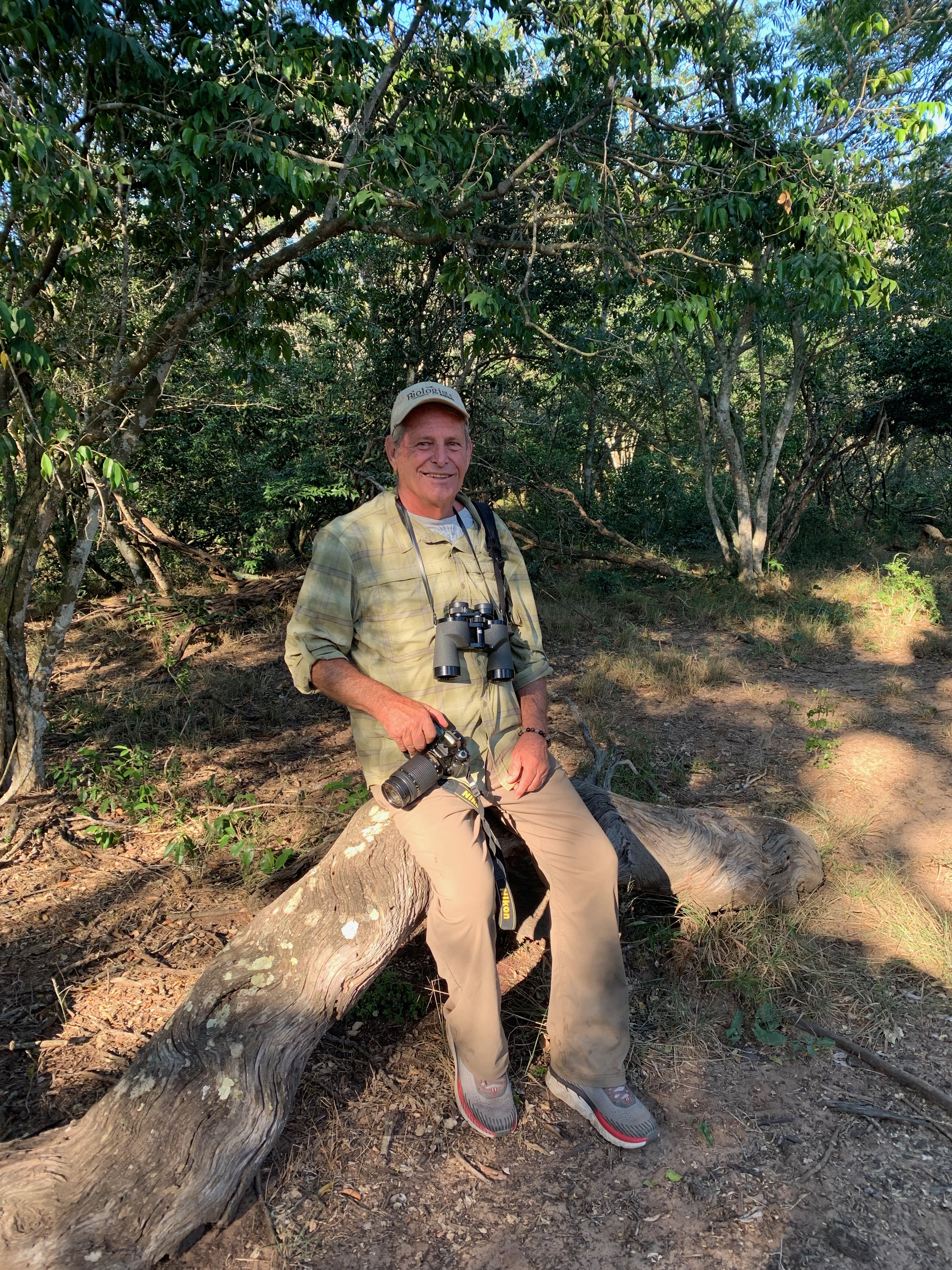
“Hey, you with the camera. You do know there is a big cat walking up behind you, right?”

The safari jeep was an open specialty vehicle for nine people and the guide and driver. It was a bit like climbing on a jungle-gym to get in and out. The dirt roads were rutted and dusty. In places the drivers used 4-wheel drive. We had one flat. It was a big deal to change and have a spare brought to us on a little used trail road in the hills.
The drivers had to be spotters for everything on either side of the road, including looking up in the trees. They would pause the vehicles to read animal tracks in the brown roadside dust as they worked the radio for the exchange of information with other guides. And most importantly, they would revealed themselves as masters of calming human behavior in challenging situations. We adored our guides. They would talk about the ecology of the animals, insects and birds. They would be driving and abruptly stop to point out hyena tracks and lion tracks. They would show where an elephant had swept red laterite soil from the road onto their backs and the details of bird and mongoose tracks. They would show how to tell how many hours or days a track was made and if it was a male or female that had crossed the road. They could pick out baboon calls while the jeep ran and tell us about the flying pattern of eagles compared to vultures. Every minute with these remarkable men was an education. They knew their trade and were able to share it in a way that a bunch of North American and Australian biologist could truly appreciate. One of our guides, Massi was amazing. He worked all over South Africa and Botswana. He had competed in tracking competition and was rated as one of the top two guides in all South Africa. Our other wonderful guide was named Lucky. We were lucky to have him. When he was on the trail of some mega fauna for us, it was like being on a hunt. No birdcall or sound in the forest was ignored. The sounds of the forest told a story to men that loved animals and were dedicated to bringing the rich tapestry of savanna wildlife into our lives. It was wonderfully very, very special.
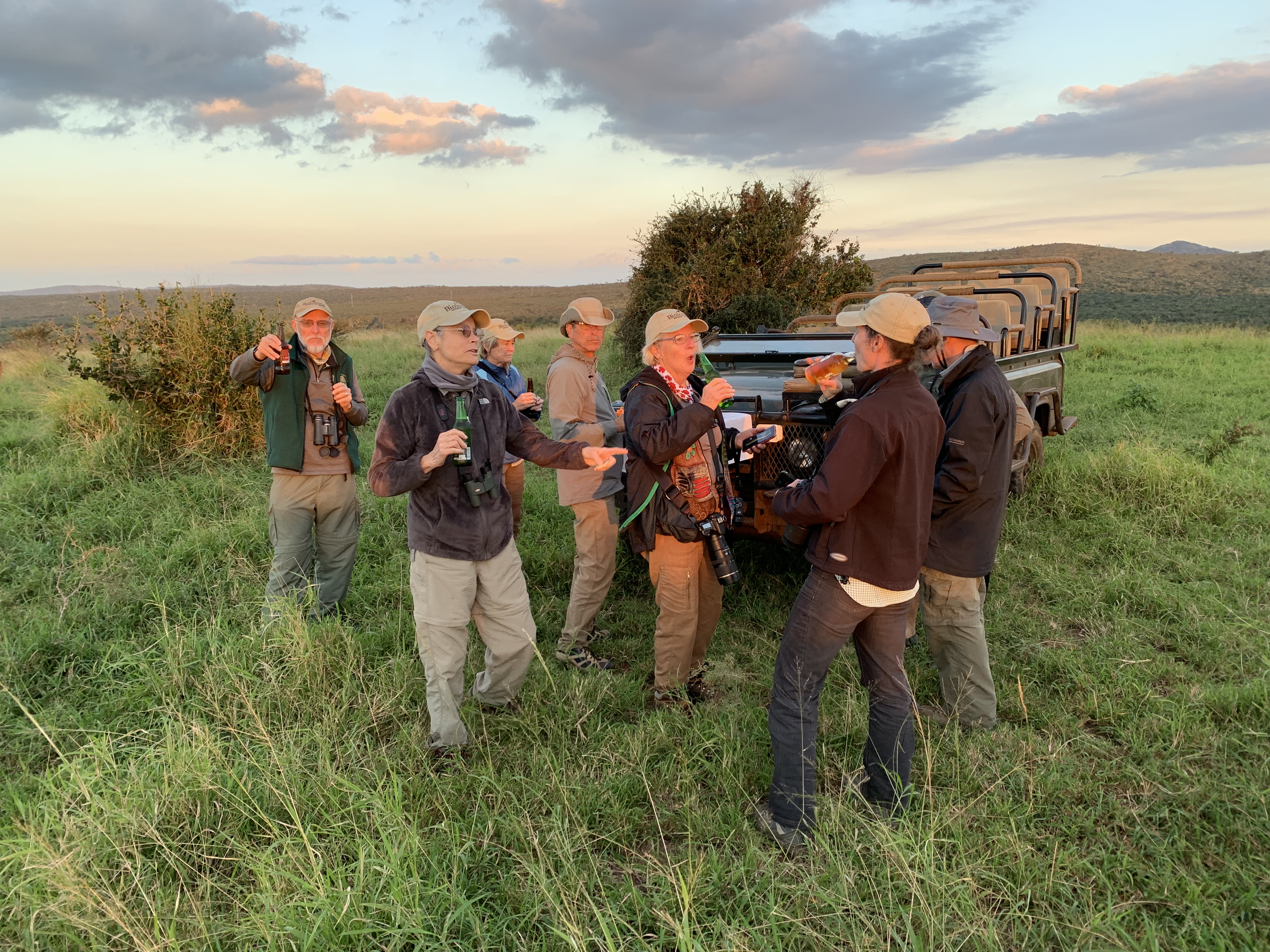
As the African sun went down, the drivers would find a spot for a “Sundowner”. They would park the jeep and set up a small table and break out the wine. It was always a delicious moment to wash the dust from our mouths and take in the absolute wonder and beauty of our day’s experiences. The driver would drive back slowly using a powerful hand lamp to scour the forest for animals moving during the crepuscular period between day and night. We would pull into camp about 7 for dinner at 8. That hour was for a quick shower and rest. Sometimes the moments with the animals were so intense there was no thought of leaving the forest. Getting back at 8 or 9:30 for dinner was awkward but being with big animals in the savanna forest right before our eyes, and who is hungry anyway?
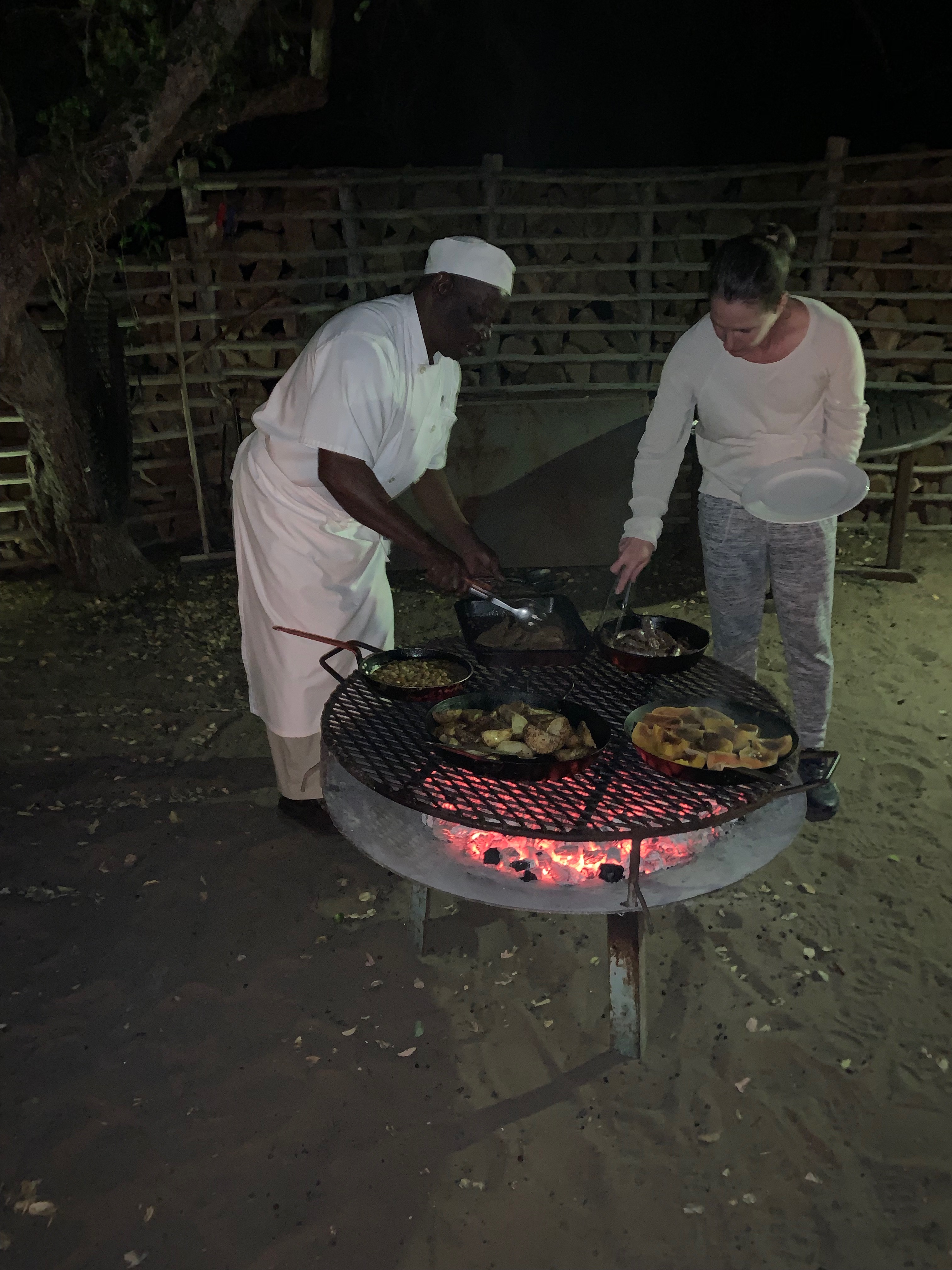
Our favorite cook was named “Number-One” he had no front teeth but made up for it with a sense of grandiosity of purpose of cooking for us and announcing what he had prepared. We eat very, very well. We all gained weight. His meats, side dishes and deserts were first class. The vegetarian dishes were excellent. Our meals were typically shared with the guides or research scientists. There was often a lot of laughter. The kind of laughter that echoed of really genuinely happy people, filled with the excitement of a magical day and being able to share that delight with friends over good food and South African wine. Delicious for the mouth and soul. Really, good stuff.
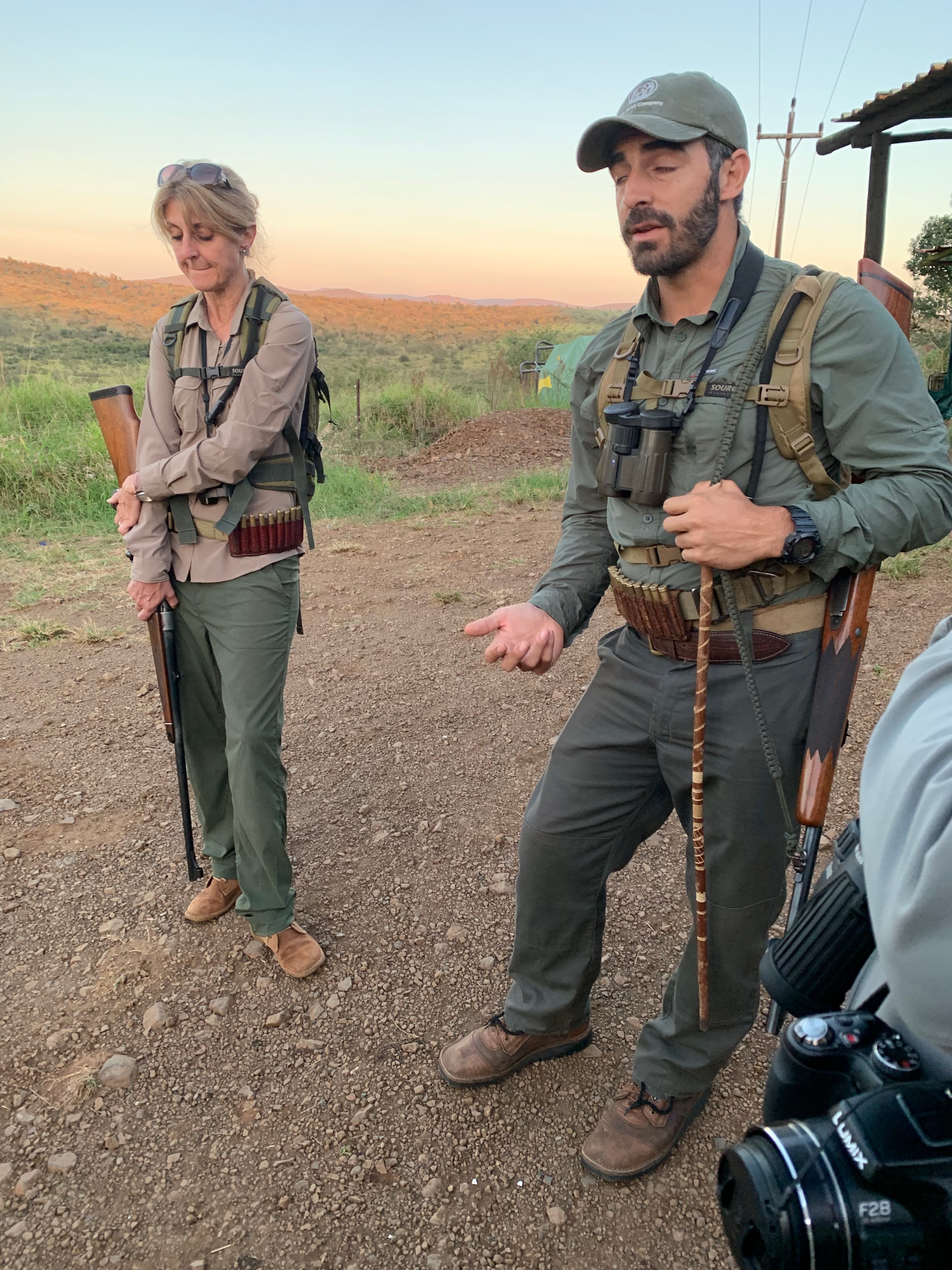
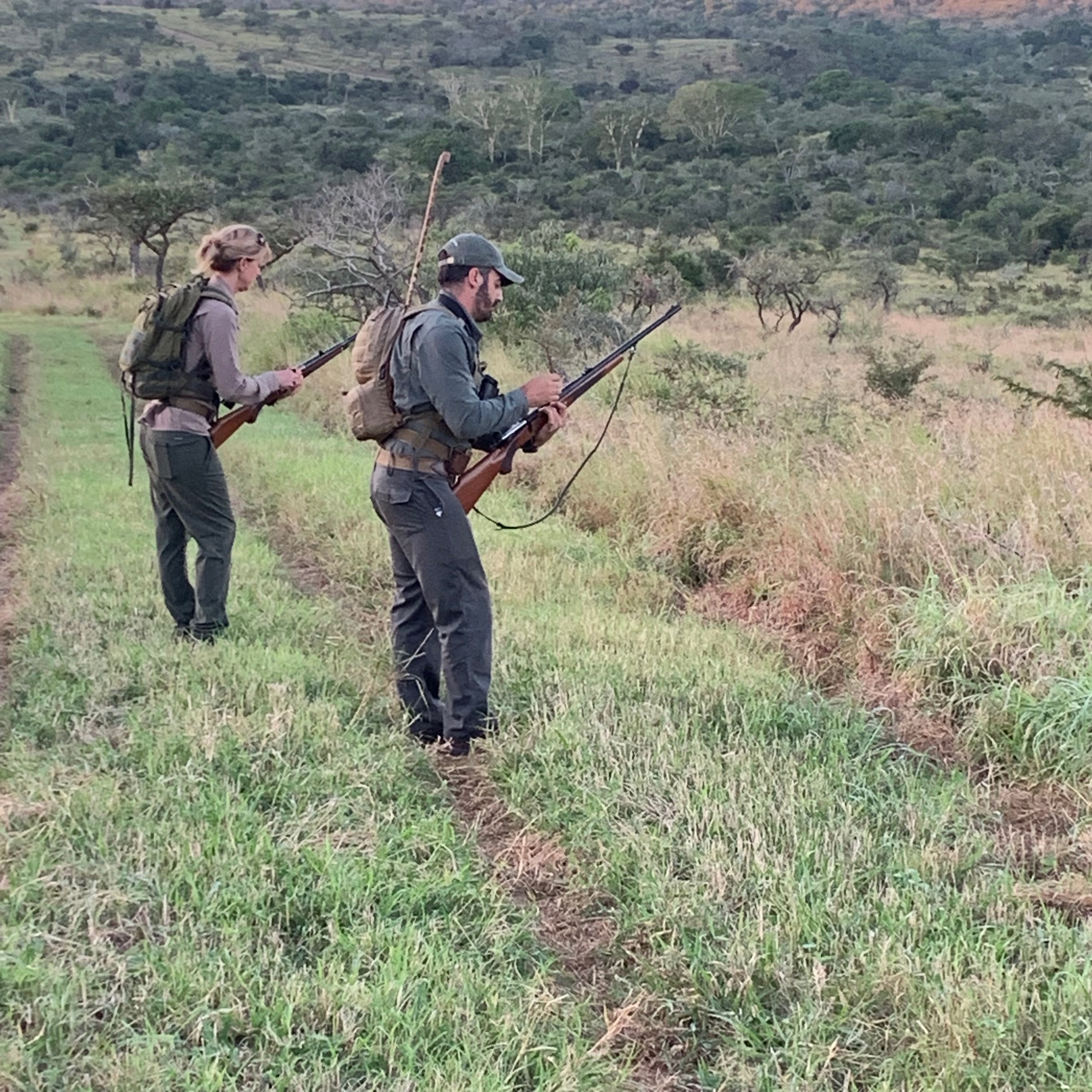
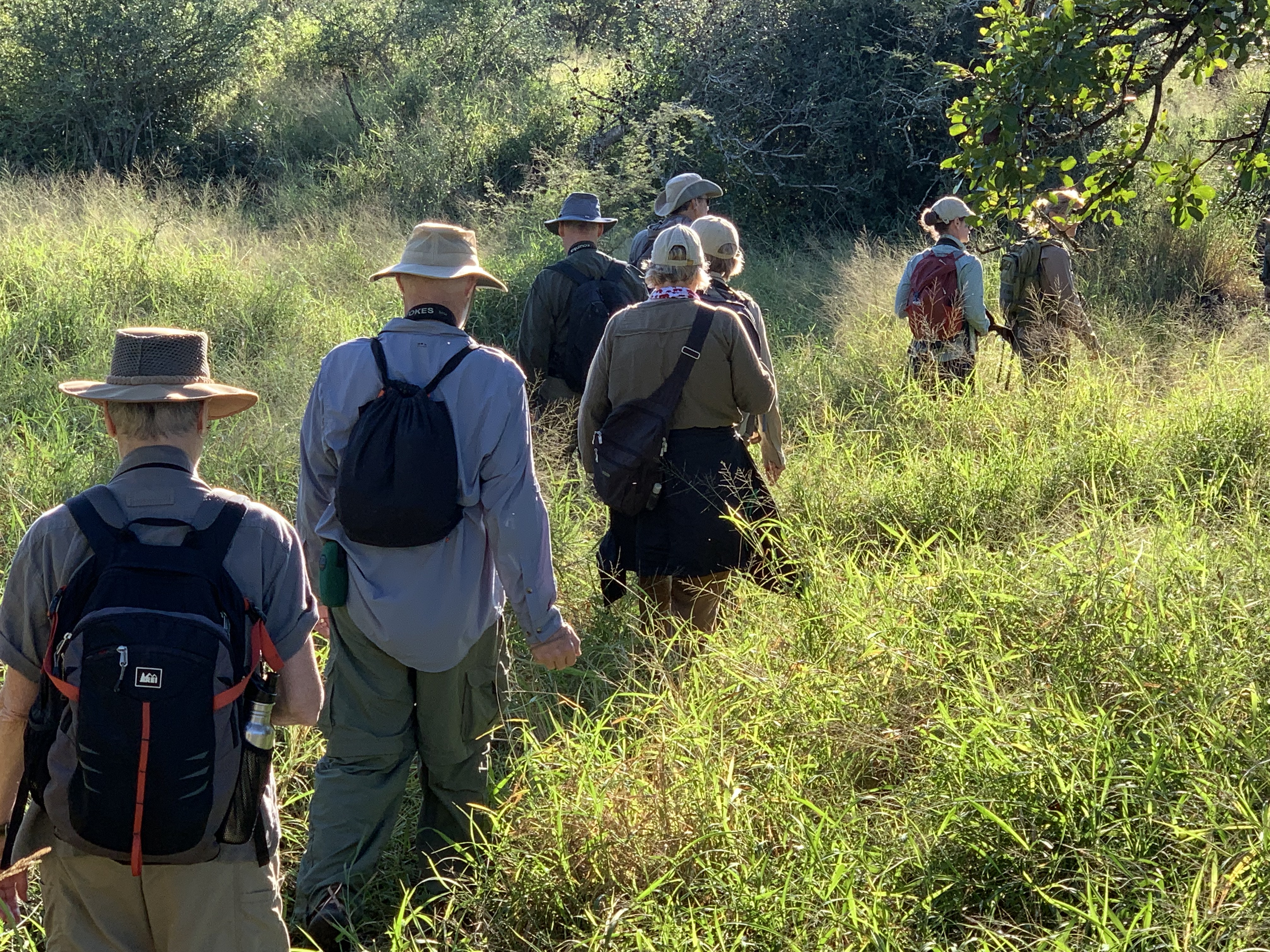
The start of our hikes or trek as they are called there was always about safety. The guides carried loaded rifles. We had to walk single file. No talking. Watch for the hand signals. If there is a dangerous situation, walk backwards.
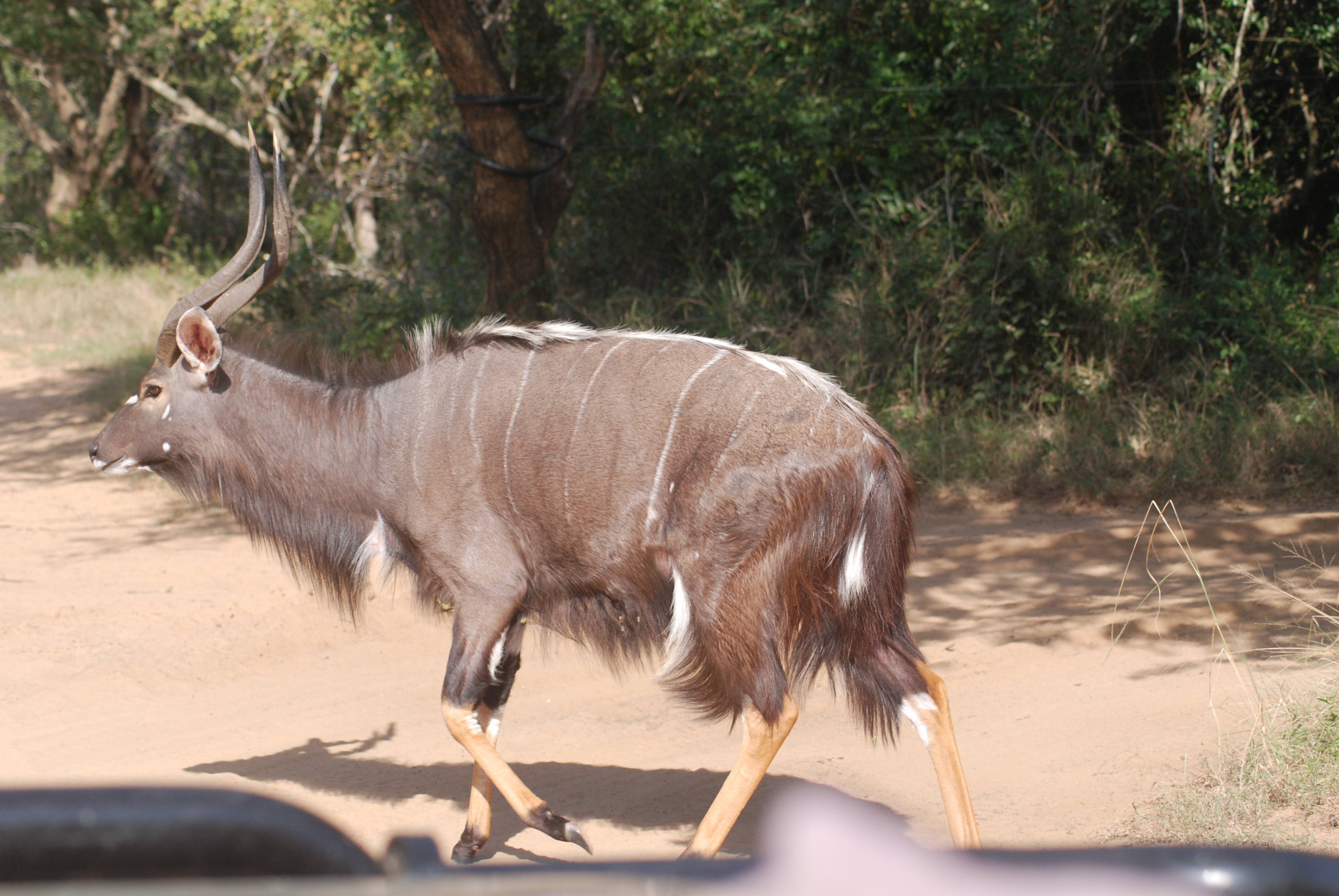
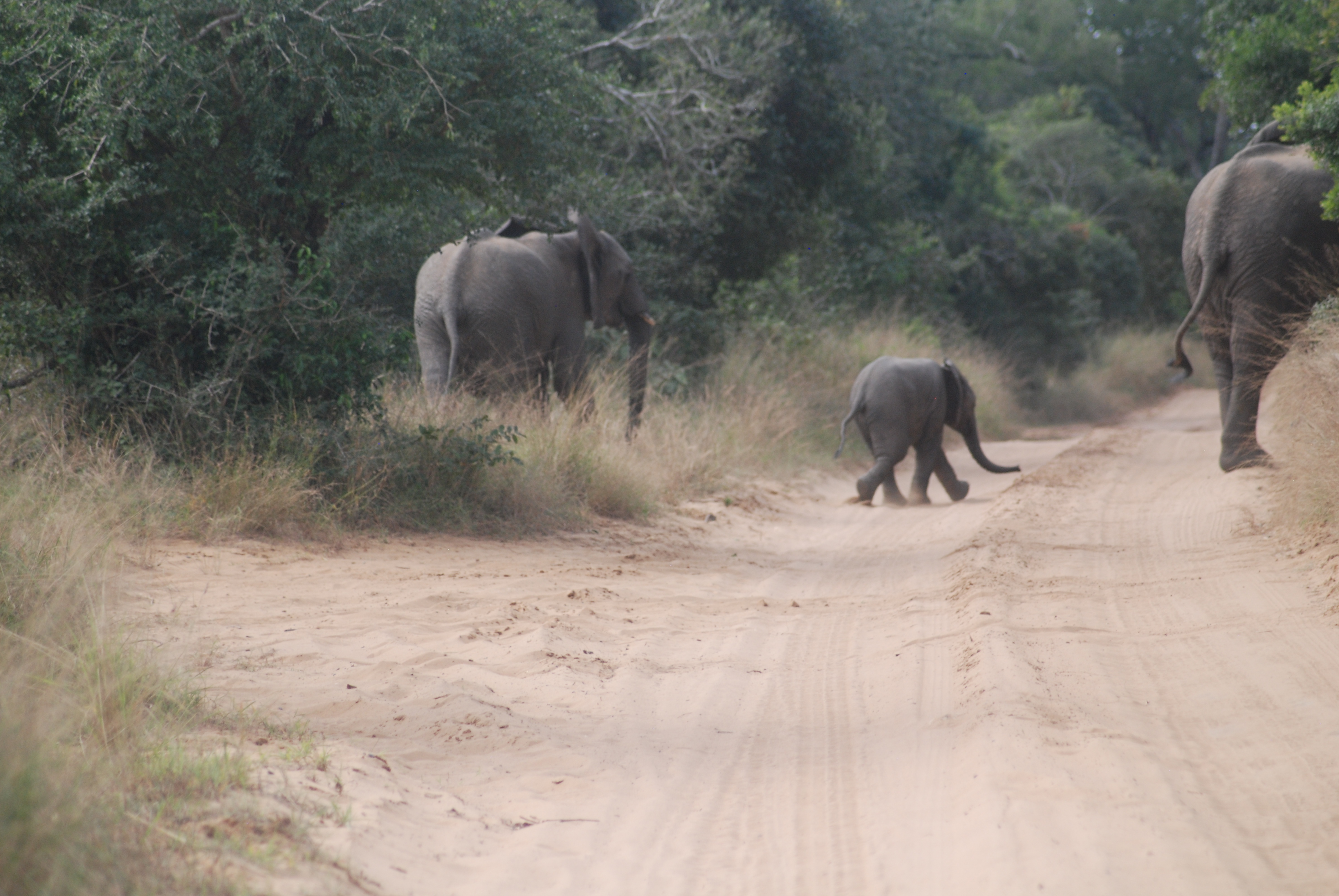
There is no way to adequately describe all the amazing experiences but a few photos illustrate a sample of what we saw. Enjoy.


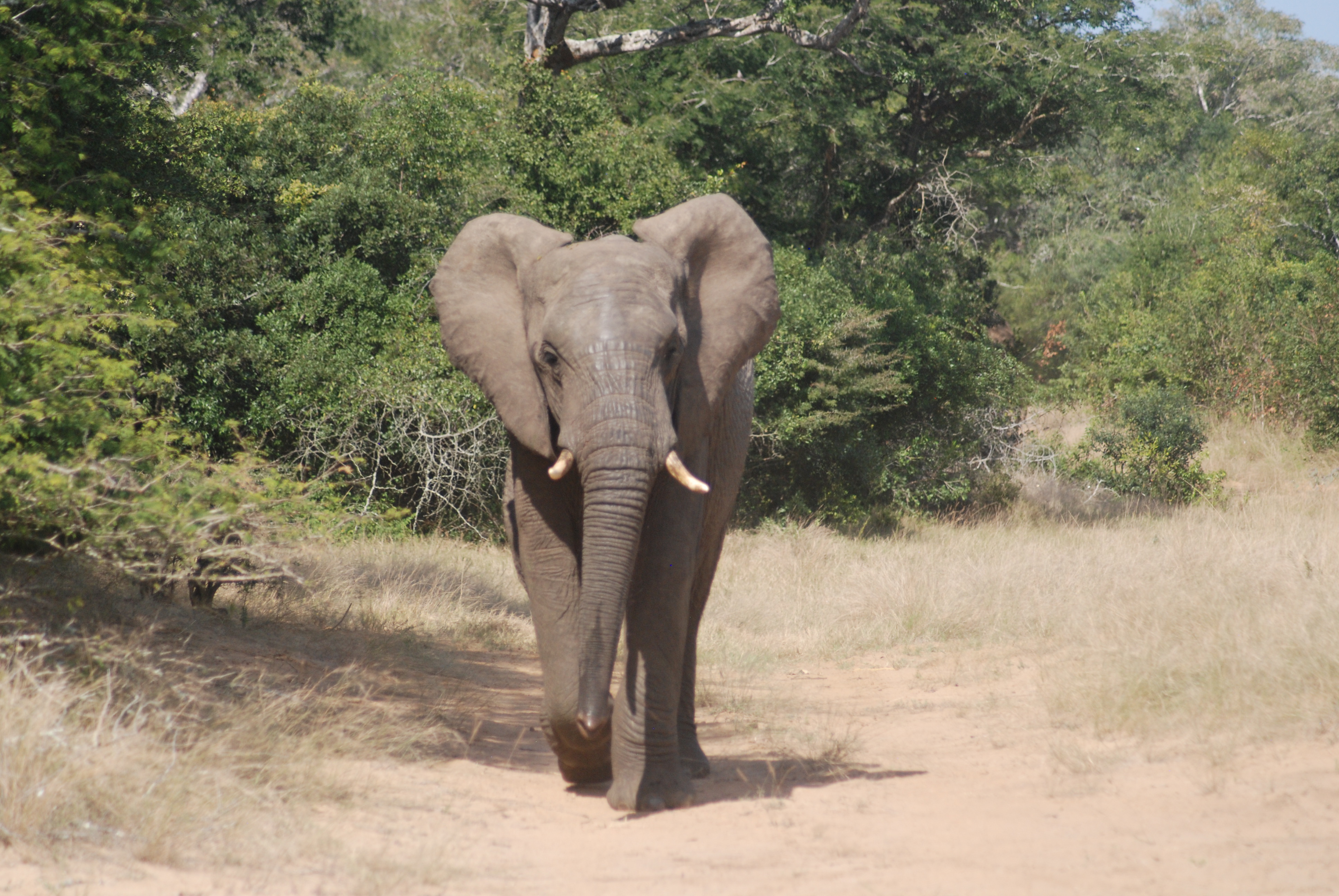
Got it! The flared ears and slight tilt of the head were, “I mean business” We stopped and let they all pass.

 ruthlessparadise.com